

They clearly wanted to know the real business: what we stood for, whether our brand had depth and whether our culture had sincerity. They did not pull their punches and were not swayed by superficial nonsense. When they reported on their findings and made recommendations, I was blown away.
Case Study
Engineering joy with Alitex
Well nurtured
Alitex is a family-run business with a remarkable reputation. For decades, it has designed and built aluminium Victorian-styled glasshouses for private gardens, estates and leading horticultural settings. Loved by customers, trusted by garden designers and admired by leading voices, it had earned real affection, respect and kudos.
As Alan Titchmarsh once told Mary Berry: “Mary, if you’re going to buy a greenhouse, it has to be an Alitex.”
So, when the team appointed Flintlock, it was curiosity, not crisis, that brought them to us.
See more clearly
Alitex had come through a period of exceptional demand, driven in part by the Covid-era pull towards gardens, growing and outdoor space.
But now, the market was normalising. Sales were slowing from their peak, and the business wanted to take a fresh look at what came next.
Initially asked to audit and assess the retail strategy, the project very quickly opened up into bigger questions.
“We wanted Flintlock to ask the questions we may not already have thought of.”
Nelly Hall, Brand Director and owner, Alitex
To answer these properly, we needed to hear from people inside, around and beyond the business.
Through an extensive Sparking exercise, we ran workshops with the team, spoke with stakeholders, key advocates and garden designers, visited customers in the UK, and held conversations with customers in the US.
The more we listened, the richer the findings became. And the clearer the opportunity.
Hidden gems
Alitex had something most brands seek. People loved it, and its reputation ran deep.
Customers talked about the pride and joy of having an Alitex in their garden. They identified with the brand and felt part of its world.
Across the horticultural world, the brand was trusted, valued and admired. It’s reach extended further too, from wider lifestyle coverage to David Beckham’s own Alitex glasshouse being featured in his guest edit of Country Life.
Inside the business, we found a team united by an impressively lived-out purpose: Passionate about all that grows. This ran wider too, with a recent B-Corp commitment, strong community-minded and values and a clear care for its people.
Throughout, one phrase kept coming back: “They’re the Rolls-Royce.”
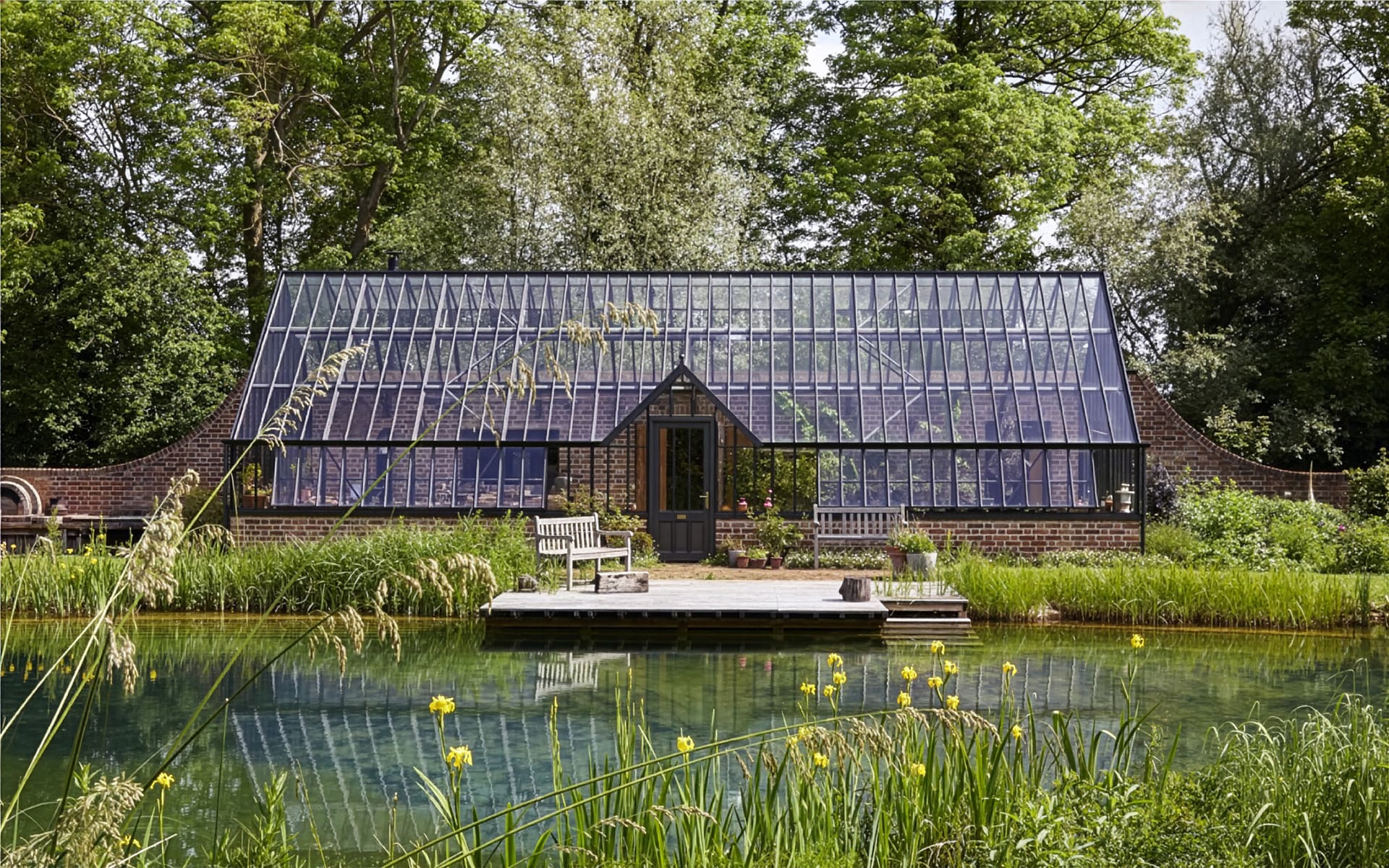
For us, this was not a throwaway line. Instead, revealing what sat behind the Alitex feeling. People were not only talking about beauty or status but trust and quality and confidence. Combined, those things had made Alitex the gold standard.
But, the brand was not without its challenges. There were quiet contradictions.
- The engineering was exceptional, but the emotion led the story.
- The family values were powerful, but not fully visible.
- The offer was extraordinary, but not made clear for customers to know why or how to navigate it
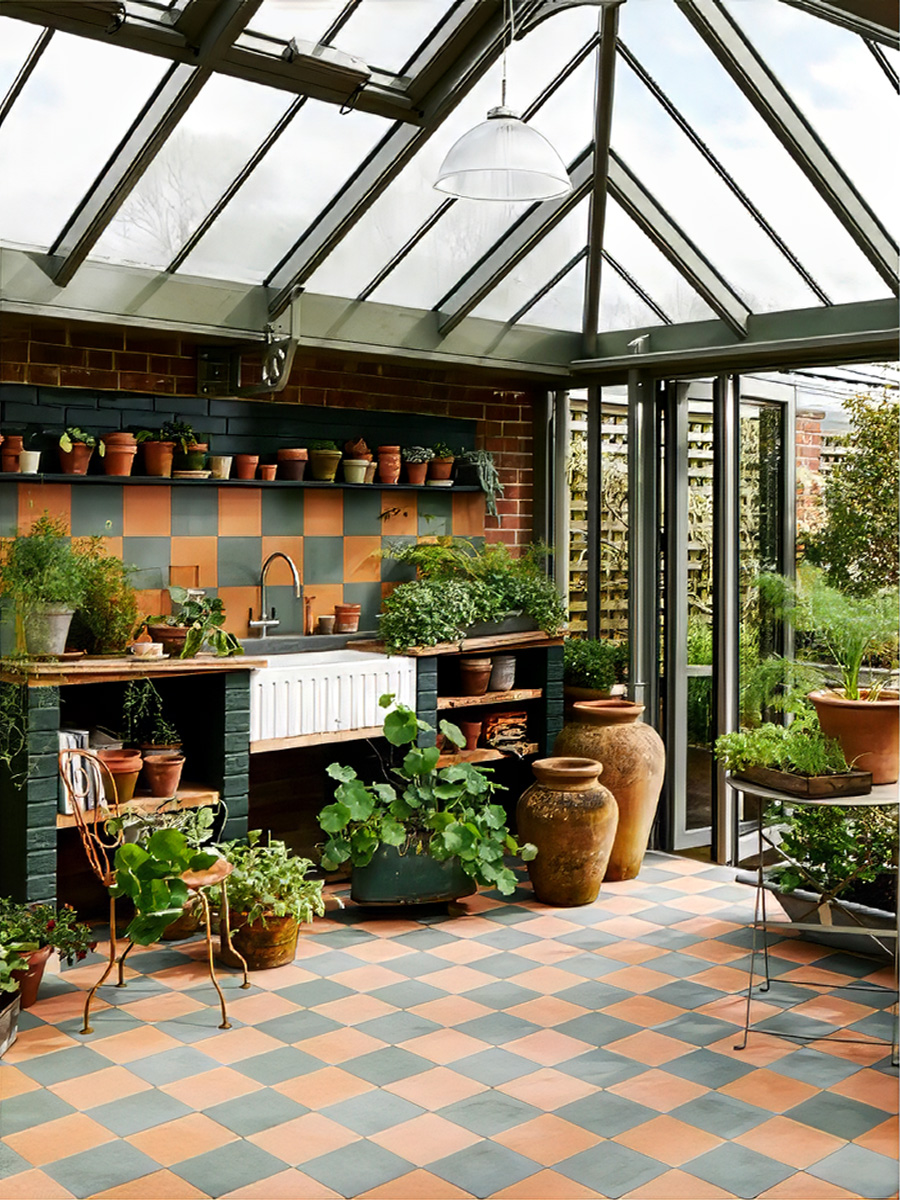
And the market was changing. Competitors were catching up, looking more similar on the outside and offering similar service promises for less.
In our view, Alitex could no longer rely on love and reputation alone. It needed to make the reasons behind that belief clearer, and to put more daylight between itself and the market to retain their best-of-best position.
A stronger frame
This became Engineering Joy.
A single-minded essence and brand platform that connected both what people felt about Alitex with the engineering, service and care that proved it, bringing out all aspects of what sat behind brand:
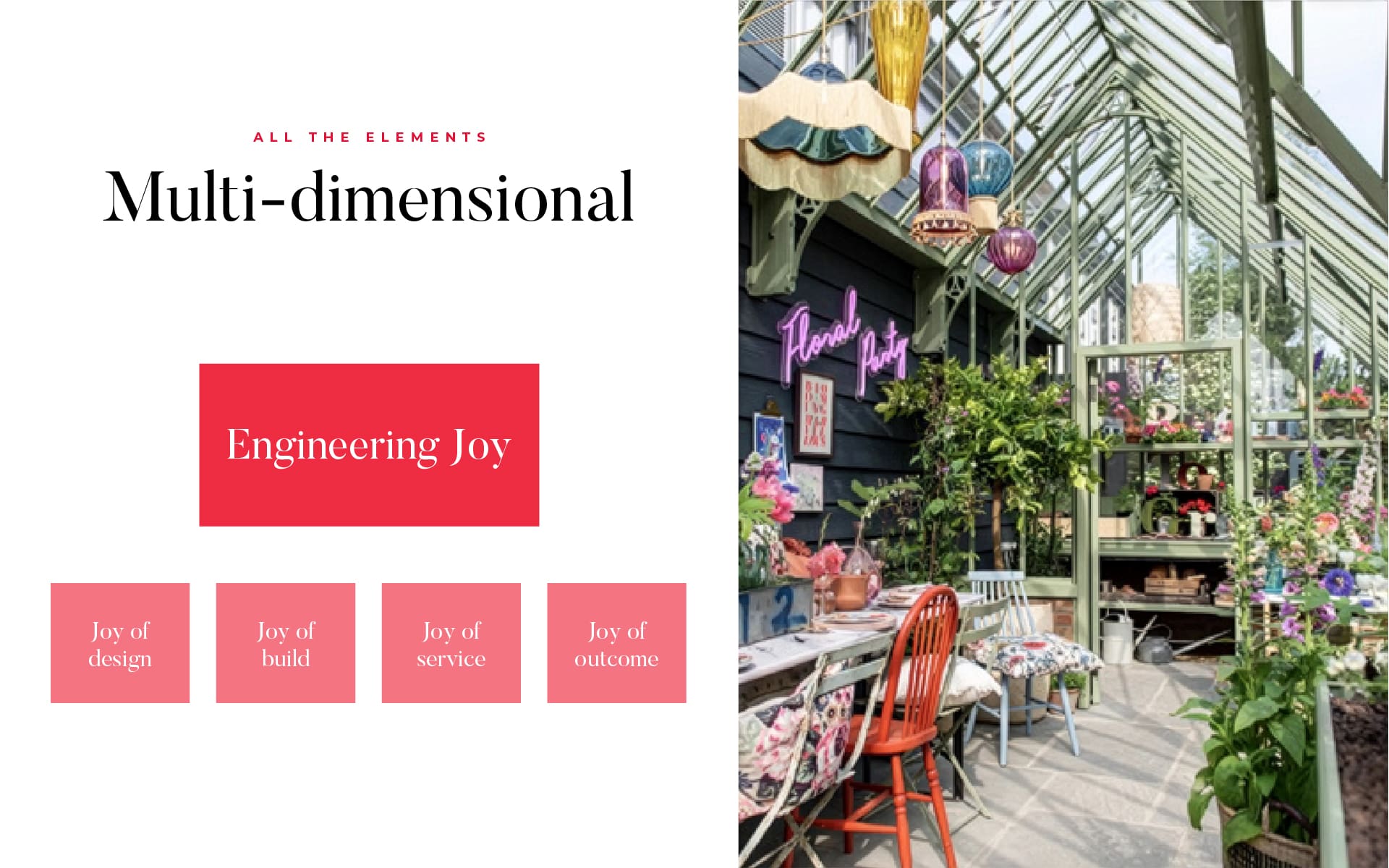
This gave the structure to tell the story with more confidence, sell with more clarity, innovate with more focus, and deliver a customer experience worthy of the reputation it had earned.
We also saw a strong commercial opportunity.
Three things stood out:
- The Thomas Messenger frame product was a major asset. It carried the original Victorian glasshouse design, and a heritage story no competitor could claim. But for something so distinctive, its benefits and story felt too hidden.
- The Traditional frame also had more to give. Alitex’s own refined, Victorian-inspired design was built on decades of working greenhouse knowledge and craft, but felt lost without a clear enough role or story of its own.
- The National Trust range was prominent, and the sales team had become used to leading with it. But this was not sustainable as a selling strategy, and risked narrowing how customers understood Alitex over time.
Overall, customers were not always seeing the full strength of what Alitex could offer. Too much was led by internal operation, rather than being customer-led.
Together with the leadership team, we reframed the offer around a simple thought: the right Alitex for the right garden.
Then, we developed a clearer customer-journey and product architecture around customer needs, their garden, the service they needed and the style they wanted.
The finished framework made the offer easier to understand, easier to choose and easier for the team to sell with confidence.
Working model
Our work did not stop at the strategic framework.
We also ran rollout workshops with the team, giving people a shared language and a clearer way to use the new thinking. We also led communications planning workshops, helping Alitex turn the strategy into practical activity across brand, sales, customer experience and future campaigns.
The aim was to make sure Engineering Joy was not just understood, but used, in how the team talked about the offer, guided customers, shaped content and planned what came next.
Flintlock took the time to truly understand the culture and values of Alitex, and how our purpose intertwines with our customers, brand and products. They used extensive insight from the team and customers to present a pragmatic and ambitious evolution that we have adopted in full.